
 By hunger game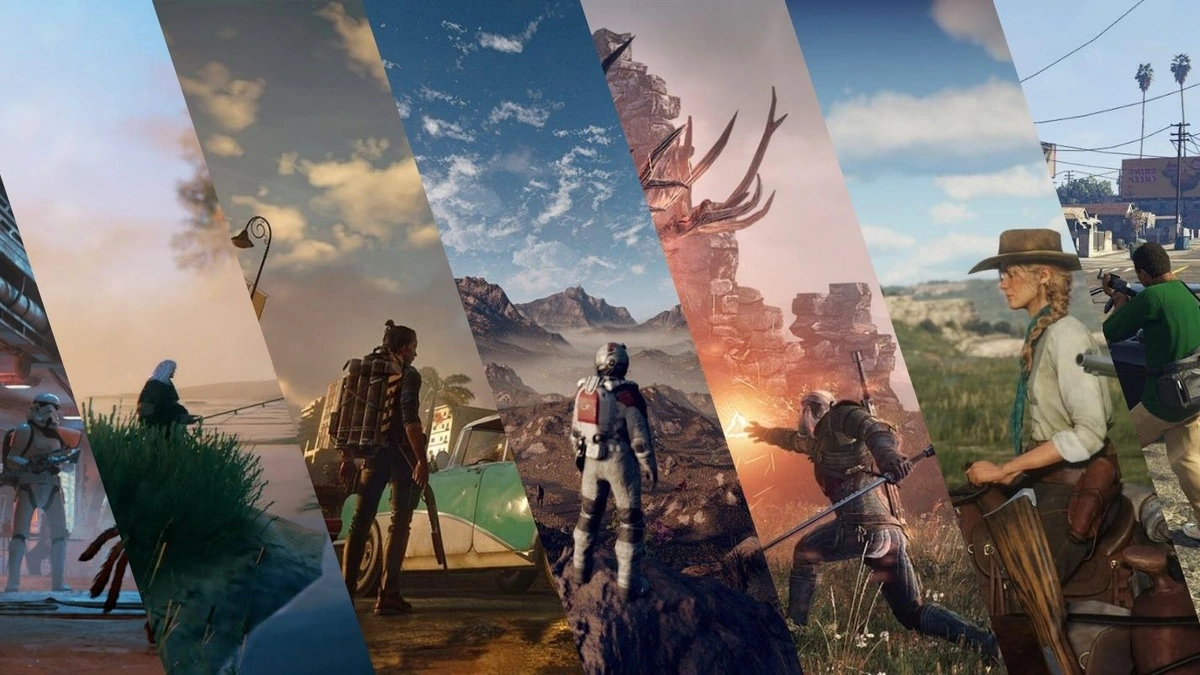
Ah, the open world. Just the phrase conjures up images of endless horizons, hidden treasures, and the thrilling promise of a story unfolding entirely on your terms. For many of us, the allure of stepping into a vast, living, breathing virtual space is undeniable. It’s not just about traversing a massive map; it’s about the feeling of being truly free, of making choices that genuinely matter, and of stumbling upon wonders no game designer explicitly directed you towards. But here’s the thing, haven’t you ever wondered why some of these games stick with us long after the credits roll, while others, despite their sprawling size, fade into memory?
It’s not just about graphical fidelity or the sheer acreage of the playable area. No, what truly elevates a game into the realm of the TOP Open World Games is something deeper. It’s a delicate alchemy of design philosophy, player psychology, and often, a dash of sheer genius that makes the virtual feel utterly real. As someone who’s spent countless hours lost in these digital realms, what fascinates me isn’t just what they offer, but why those offerings resonate so profoundly. Let’s peel back the layers and discover the real secrets behind these genre-defining masterpieces.
Beyond the Map | The Philosophy of Player Freedom
When we talk about open world games , the concept of freedom is paramount, isn’t it? But it’s not just the freedom to go anywhere; it’s the freedom to be anyone, to do anything (within reason), and to forge your own narrative path. This is the heart of true player choice , and it’s what separates a glorified level select screen from a genuinely immersive experience.
Think about Grand Theft Auto V. While it has a compelling story, its lasting appeal often lies in the sheer mayhem and emergent gameplay you can create. Want to hijack a plane and fly it into a skyscraper? Go for it. Want to just drive around listening to the radio? Nobody’s stopping you. This isn’t just a game; it’s a canvas for your digital delinquency. Similarly, games like Red Dead Redemption 2 offer a different kind of freedom – one steeped in atmosphere and consequence. Every interaction, every choice, even every detour into the wilderness, feels like it has weight, shaping Arthur Morgan’s journey and your personal connection to him. These are not just large spaces; they are vast canvases for player freedom in games , where the world reacts to your presence and decisions.
The best examples of these aren’t just giving you a wide-open space; they’re giving you tools, systems, and a dynamic world that responds to your input. This cultivates a sense of genuine ownership over your adventure. It’s a subtle trick, but it’s incredibly effective in making us feel like we’re not just following a script, but truly living out a fantasy within these vast game worlds .
Crafting Worlds, Not Just Levels | The Art of Immersion
A truly great open world isn’t merely big; it’s deep. It’s got a history, secrets, and a unique character that makes every corner feel purposeful. This is where the magic of immersive open world experiences truly shines. Consider Elden Ring, for instance. Its world, The Lands Between, is not just beautiful but also haunting, mysterious, and incredibly dangerous. Every ruined castle, every whispering wind, every cryptic NPC tells a story, often without uttering a single expository line. The game trusts you to explore, to connect the dots, and to piece together its fragmented lore.
Or take The Legend of Zelda: Breath of the Wild. Hyrule, post-calamity, is a masterclass in environmental storytelling. You see the remnants of a fallen kingdom, the signs of a struggle, and the silent invitation to discover what happened. The game subtly guides you through visual cues and tantalizing vistas, encouraging pure exploration . It’s not about checklists; it’s about seeing a distant peak and thinking, “I wonder what’s up there?” and then going to find out. This kind of design fosters an unshakeable sense of wonder and makes every discovery feel earned, which is crucial for any best open world titles .
These worlds don’t just exist to facilitate gameplay; they are the gameplay. They pull you in, demand your attention, and reward your curiosity with revelations and challenges that feel perfectly organic. This deep, palpable sense of place is what truly makes a world feel alive, moving beyond just being a backdrop to the action.
The Evolving Blueprint | How Innovation Shapes the Genre
The open-world genre isn’t static; it’s constantly reinventing itself. What was considered groundbreaking a decade ago is now standard. The truly genre-defining open world titles are those that dare to innovate, pushing the boundaries of what these sprawling environments can offer. They introduce new mechanics, tell stories in unconventional ways, or leverage technology to create unprecedented experiences.
The Witcher 3: Wild Hunt, for example, didn’t just give us a massive world; it populated it with compelling characters and quests that were rich with moral ambiguity, forcing players to grapple with difficult choices. Every side quest felt like a mini-saga, often more engaging than main quests in other games. This elevated the standard for narrative integration within an open world, demonstrating an evolving open world design that prioritizes quality over sheer quantity.
Even a game like Cyberpunk 2077, despite its tumultuous launch, represents an ambition to push the genre forward with its dense, vertical city design and intricate RPG systems. Post-patch, it’s a much-improved experience, showcasing how developers are continually trying to build more dynamic and reactive environments. These innovations, whether in narrative design, environmental interaction, or systemic depth, are what keep the genre fresh and exciting, proving that even the most established formulas can be refined and reimagined. You can learn more about the concept of open-world gaming and its evolution onWikipedia.
The Sandbox Effect | When Rules are Meant to Be Broken
Part of the joy of open-world gaming is the sheer playground aspect of it – the feeling that you’ve been given a vast box of toys and told to go wild. This is the essence of best sandbox games , where the systems are so robust and interactive that players can create their own fun, often in ways the developers never even envisioned. Think about the likes of Minecraft (though less of a traditional open-world RPG, its sandbox elements are undeniable) or the boundless possibilities within The Elder Scrolls V: Skyrim. The latter, an absolute titan among RPG open world titles, allows you to become anything from a stealthy assassin to a mighty mage, or simply spend hours foraging for ingredients and crafting potions. The world responds to your approach, but never dictates it.
These games offer profound sandbox experiences , where the story is often secondary to the opportunities for emergent gameplay. They thrive on player creativity and experimentation. Want to see if you can take down a dragon with nothing but a spoon? Go for it! The outcomes, whether glorious success or hilarious failure, are entirely your own. This unscripted fun is a cornerstone of why certain titles endure, fostering communities that share tales of their unique escapades.
What Makes a Game One of the TOP Open World Games for Indian Gamers?
For gamers in India, the appeal of TOP Open World Games isn’t just about global trends; it’s often about finding experiences that resonate locally or offer incredible value for money. Accessibility, replayability, and strong narratives tend to be key factors. Games that offer rich stories, diverse characters, and environments that feel alive, much like the vibrant tapestry of India itself, often climb to the top of the preference list. Whether it’s the gritty realism of a modern city or the fantastical landscapes of a bygone era, the ability to get lost in a world that feels vast and full of discovery is universally appealing.
Many Indian gamers gravitate towards titles that offer extensive content for their investment, making titles with hundreds of hours of gameplay, like The Witcher 3 or Skyrim, incredibly popular. The strong community aspect also plays a role, with discussions around open world game recommendations and shared experiences flourishing. If you’re looking for more general gaming insights, check outHungerGamerfor a wealth of information!
Looking Ahead | The Future of Vast Game Worlds
The future of open world games PC and console is looking incredibly bright. We’re seeing developers experiment with procedural generation on a grander scale, more dynamic AI systems that make NPCs feel truly alive, and even multiplayer integration that blends seamlessly with single-player narratives. The drive towards even greater immersion, more meaningful choices, and worlds that truly feel like living ecosystems continues. Think of upcoming titles promising even more responsive environments and deeper player agency; the innovation is relentless. For those keen on what’s next, keeping an eye on highly anticipated open world games is always a thrill, especially for those looking to upgrade theirPC gamessetup for the next generation of adventures.
FAQs About TOP Open World Games
What truly defines a “top” open-world game?
A top open-world game goes beyond just a large map. It’s defined by meaningful player freedom, deep immersion through environmental storytelling and atmosphere, constant innovation in design, and robust sandbox mechanics that allow for emergent gameplay and personal narratives.
Are all open-world games focused on combat?
While many popular open-world games feature combat, it’s not a universal requirement. Games like Minecraft (creative mode), Cities: Skylines, or even some exploration-focused titles offer vast worlds with little to no combat, emphasizing building, discovery, or puzzle-solving instead.
Which are some critically acclaimed open-world games released recently?
Recent critically acclaimed titles include Elden Ring, The Legend of Zelda: Tears of the Kingdom, Baldur’s Gate 3 (with significant open-world-like exploration), and Cyberpunk 2077 (post-patch). These represent the forefront of modern open-world design.
Do open-world games require powerful hardware?
Many modern open-world games, especially on PC and current-gen consoles, can be quite demanding due to their vast environments, detailed graphics, and complex physics. However, there are numerous older or less graphically intensive open-world games that run well on more modest hardware. Always check system requirements!
Can I find good free-to-play open-world games?
Absolutely! Games like Genshin Impact, Dauntless, and some MMORPGs (Massively Multiplayer Online Role-Playing Games) offer extensive open-world experiences without an upfront cost. They often feature vast areas to explore, quests to complete, and character progression systems. For more on highly-rated open world games, you can check out resources likeGameSpot’s list of best open-world titles.
So, there you have it. The real magic of the TOP Open World Games isn’t just in their size, but in their soul. It’s in the way they respect your time, reward your curiosity, and allow you to truly lose yourself in a meticulously crafted reality. It’s about the stories you tell yourself, the unexpected encounters, and the quiet moments of breathtaking beauty. These aren’t just games; they’re invitations to another life, another world, and isn’t that why we play?